English| EUR
Suggested for you
More currencies
Book Now
Open today · 09:00–17:00

Tea Plantation In Kerala

Tea Plantation In Kerala — Kannan Devan Hills Estate Entry & Guided Visits

Mist over green terraces, leaf sorted by patient hands.

78K+ travelers chose this
Free Cancellation
Right now: Moderate — morning visitors Morning visits offer cooler weather and a chance to catch the 10:00 AM history presentation.
3-5 hours recommended
1 Languages
Up to 15 guests
Free Cancellation
Free cancellation Instant confirmation Mobile voucher Verified partner Book now, pay later
Choose your ticket

Ticket options at a glance

Compare fares, pick the fit — all bookings are mobile-voucher and eligible for free cancellation where shown.

Full-Day Munnar Mountain Trekking Experience 7 hr
Guided Experience

Full-Day Munnar Mountain Trekking Experience

4.7 (57)
€20
  • Expert local guide
  • Small group
  • Skip-the-line access
  • Free cancellation
Book this ticket
5-Day Private Kerala Escape: Munnar, Thekkady & Alleppey 120 hr
Luxury / Private

5-Day Private Kerala Escape: Munnar, Thekkady & Alleppey

4.5 (15)
€246
  • Private experience
  • Personal attention
  • Premium amenities
  • Free cancellation
Book this ticket

Is it worth it?

Worth it for curious visitors at 150 INR

At 150 INR, a tea plantation in Kerala at KDHP's Munnar estate sits well below the price of comparable estate museum experiences across South India. That single ticket covers a working museum with vintage withering troughs, rolling machines, and a demonstration room that makes the journey from green leaf to orthodox pekoe genuinely legible. Roadside views of the Kannan Devan hills look appealing, but they offer no context — the fermentation chambers and drying belts inside are what separate a structured tea plantation in kerala tour from a scenic drive past. The value shifts with your curiosity: anyone interested in cultivation methods, flush quality, or estate economics will find 150 INR under-prices the experience. Casual visitors seeking only scenery may feel less satisfied. Among tea plantation in kerala tours at this price point, few match this combination of vintage machinery, live demonstration, and curatorial depth under one roof.

What makes it worth it

  • Museum and demonstration room included in the 150 INR ticket
  • Vintage rolling machinery rarely accessible at this price point
  • Full green-leaf-to-pekoe process made tangible, not just described
  • Kannan Devan estate context no roadside view can provide
  • Priced well below comparable South India tea estate experiences

Keep in mind

  • Passive visitors seeking only scenery may feel underserved by the admission
  • No advance skip-the-line booking; weekend queues can slow entry
  • In-estate tea purchases add cost beyond the base ticket fee

Bottom line: For 150 INR, tea plantation in kerala tickets deliver museum-grade access and live demonstrations that make the price easy to justify for anyone genuinely curious about how a cup of Munnar tea is made.

Head to head

KDHP Museum vs Lockhart Factory: Choosing a Tea Plantation in Kerala Experience

Whether you buy tea plantation in kerala tickets for the centrally located KDHP Museum or book guided tea plantation in kerala tours to Lockhart, each site offers a distinct Munnar tea estate tour. KDHP excels at presenting chronological history, whereas Lockhart highlights active orthodox tea processing.

Top pick
KDHP Tea Museum
Lockhart Tea Factory
Distance from Munnar town 9 km (5.6 mi)
Production method Orthodox tea processing
Active factory access Yes (active floor access)
Museum exhibit focus Colonial history and artifacts
Standard entry price 200 INR (foreigners 400 INR)
Tasting session cost 150 INR

Verdict: While Lockhart provides a rustic, hands-on tea plantation in kerala tour, the KDHP Museum is the ideal quick, highly educational introduction right next to town.

Featured Experiences

Popular tours & activities

Hand-picked experiences loved by thousands of travelers

Recommended Experience

Powered by GetYourGuide

Another traveler favorite

Powered by GetYourGuide
Munnar: Half-Day Scenic Tea Plantation Trek Half day (returning at 1:00 PM) Free Cancellation

Munnar: Half-Day Scenic Tea Plantation Trek

Experience a 14km guided trek through Munnar’s iconic tea estates, verdant grasslands, and exotic spice forests.

4.3
FromFrom €13.67
See details
Munnar: Kolukkumalai High-Altitude Tea Estate Jeep Adventure 7 hours Free Cancellation

Munnar: Kolukkumalai High-Altitude Tea Estate Jeep Adventure

Discover the world's highest tea plantation with a sunrise jeep safari, mountain trekking, and an authentic tea-tasting session.

4.3
FromFrom €45.57
See details
Kochi Sacred Aroma & Spice Heritage Tour 2 hours Free Cancellation

Kochi Sacred Aroma & Spice Heritage Tour

Discover Kochi’s 3,000-year-old spice history through aromatic gardens, traditional incense crafting, and essential oil blending.

4.8
FromFrom €14.57
See details
Your journey

Step-by-step — what your day looks like

1

Arrival and Entry

Check in at the gate, purchase a camera pass if needed, and enter the KDHP plantation grounds.

2

History Presentation

Watch the 10:00 AM documentary tracing the origin of tea cultivation in the Cardamom Hills.

3

Machinery Gallery

Examine early 20th-century roller machines, the original CTC machine, and old rotorvane models.

4

Tea Processing Demonstration

Learn how fresh green tea leaves are dried, fermented, and sorted inside the model factory.

5

Tea Tasting Session

Sample distinct orthodox tea varieties and learn to identify tea grades from a specialist.

What you'll see

Highlights not to miss

Granite Sundial of 1913

A historic timekeeping device crafted by the Art Industrial School in Nazareth, Tamil Nadu, resting on a heavy granite block at the entrance.

Pelton Wheel Turbine

A 1920s hydroelectric turbine salvaged from the Kanniamallay Estate power generation plant, demonstrating early industrial innovation.

Rotorvane Tea Roller

A functional 1905 mechanical tea roller that represents the dawn of mechanized CTC tea processing in India.

Second Century BC Burial Urn

A massive prehistoric earthenware jar excavated from the nearby Periakanal Estate, proving ancient human habitation in the hills.

Kundala Valley Railway Rail Wheel

A salvaged metal wheel from the narrow-gauge light railway system that operated between Munnar and Top Station until a flood destroyed it in 1924.

The experience

What the visit is really like

You arrive along NH 49 into Nullatanni, ideally between 9:00 and 11:30, when the morning air is cool and the mist is still lifting off the ridges. You buy your ticket — 150 INR for adults — and step first toward the museum's timeline gallery, where sepia photographs and a 19th-century tea-making apparatus set the scene. You time your walk to catch the 10:00 AM history presentation, roughly fifteen minutes that stitch the estate's story together before you move on. From there you follow the working demonstration line, watching leaf pass through withering, rolling, fermentation and drying, the machinery clacking much as it did decades ago. You pause at the tasting counter, where a small cup of freshly processed liquor lands bright and brisk on the tongue. Outside, you walk the edge of the gardens, tracing the contour rows with your eye as pluckers move steadily between the bushes. You linger by the sundial and the antique tea roller before heading back. The tea plantation in kerala rewards an unhurried morning: the estate is open Tuesday through Sunday, 9:00 to 17:00, and closed on Mondays, so you plan accordingly and leave with the taste of high-grown Munnar tea still on your palate.

Everything You Need to Know

Your complete experience guide

All the details about your upcoming adventure in one place

Discover a Tea Plantation in Kerala

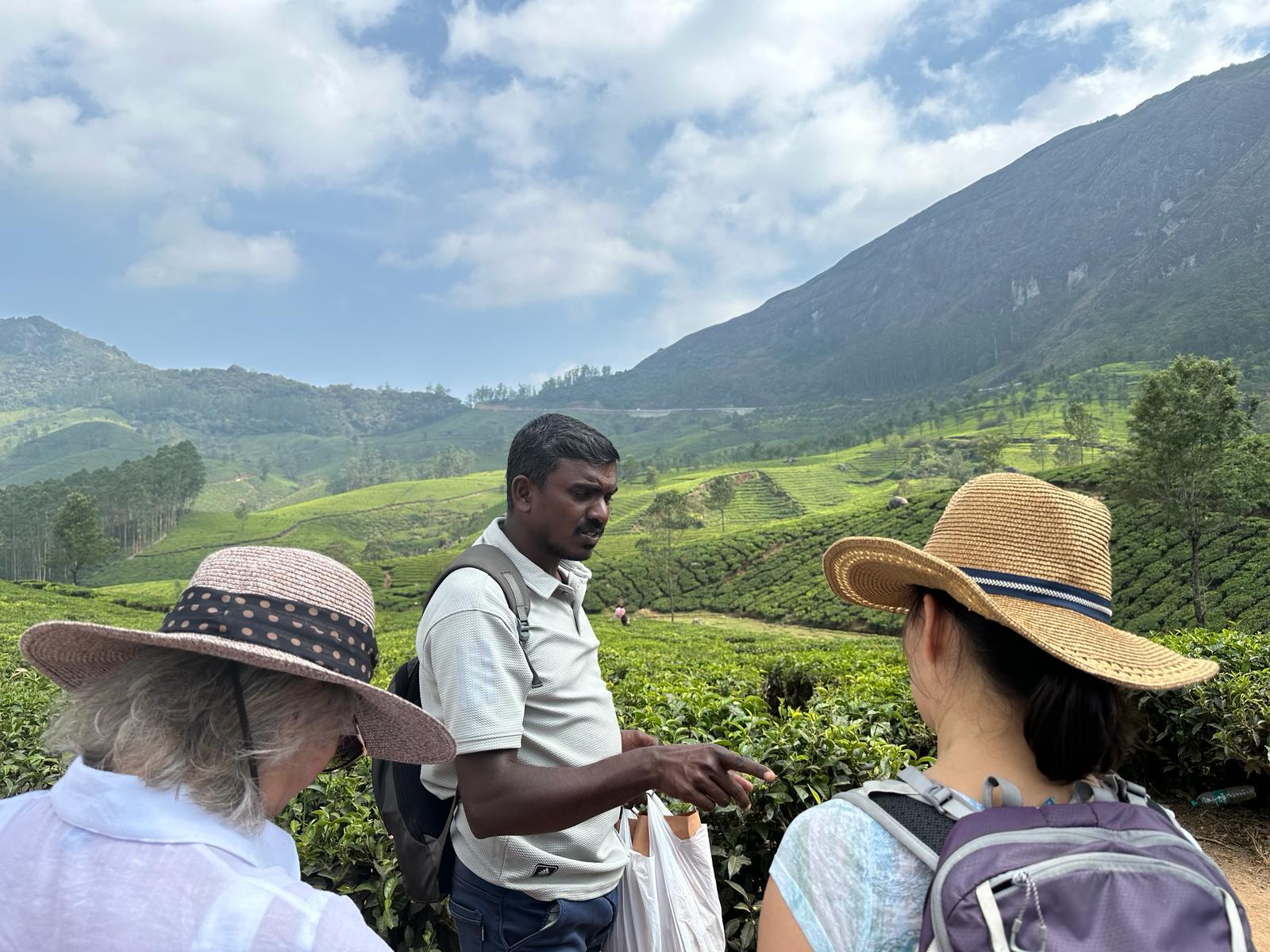
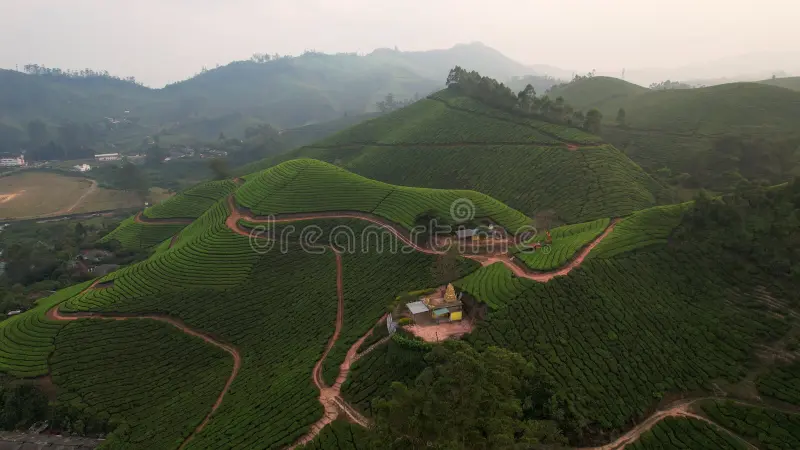
Set across the rolling Munnar hills, this tea plantation in Kerala carries the legacy of colonial-era estates first cultivated by British planters in the Kannan Devan Hills. Walking the terraced tea gardens, you can watch pluckers at work, learn how green leaf becomes black tea at the processing factory, and take in the misty Western Ghats around you. Our tea garden tours in Munnar and estate walks give travellers a grounded look at how one of India's best-known highland regions grows its harvest.

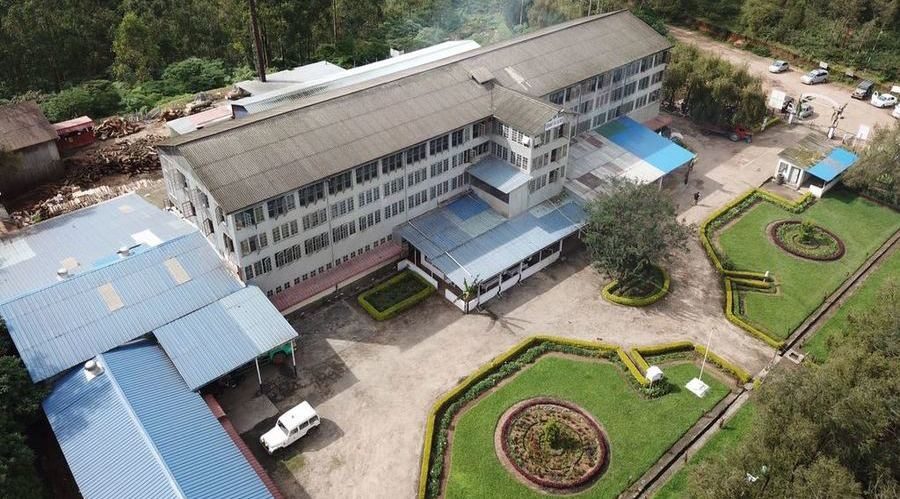
The first commercial tea bushes in the Kannan Devan Hills were planted in the 1870s, on slopes that had never grown a cultivated crop before. What began as a Scottish planter's gamble on high-altitude Camellia sinensis has become one of the most recognisable working landscapes in South India, and today the tea plantation in kerala at Munnar spreads across roughly 24,000 hectares of contoured green. The estate belongs to Kannan Devan Hills Plantations, a company largely owned by its own workers since a landmark 2005 restructuring that made it one of the largest employee-held plantation enterprises in the country. That ownership story matters, because it explains why the gardens are so carefully maintained: the people pruning the bushes and plucking the two-leaves-and-a-bud have a direct stake in the harvest. The KDHP House on NH 49, in Nullatanni, houses the Tata Tea Museum, where much of the estate's memory is kept. Geography shaped everything here. At elevations climbing past 1,600 metres, the cool air, frequent mist and sharp diurnal temperature swings slow the growth of the leaf and concentrate its flavour, producing the brisk, bright liquor for which Munnar tea is prized. Rows of clipped bushes follow the contour lines like fingerprints across the ridges, interrupted by the silver trunks of shade grevillea and the occasional rock outcrop. Original machinery — rolling tables, driers and a working antique tea-processing line — survives inside the museum, alongside photographs, a sundial and a 19th-century tea-making apparatus. What elevates a Munnar tea estate tour above simple sightseeing is this density of legible history: the visitor sees not a manicured garden but a living industrial ecosystem that has run, largely uninterrupted, for a century and a half. A daily history presentation anchors the museum experience, tracing the transformation of the Kannan Devan Hills from forested wilderness into structured plantation. Among Kerala hill station landmarks, few combine natural setting and preserved craft so completely, and the LSI of the place — the pluckers, the withering troughs, the graded liquor, the estate railway relics — rewards the curious. For anyone weighing tea plantation in kerala tours, the museum at Munnar remains the most coherent introduction to how a hillside becomes a cup, and why this particular corner of the Western Ghats still shapes India's tea trade.


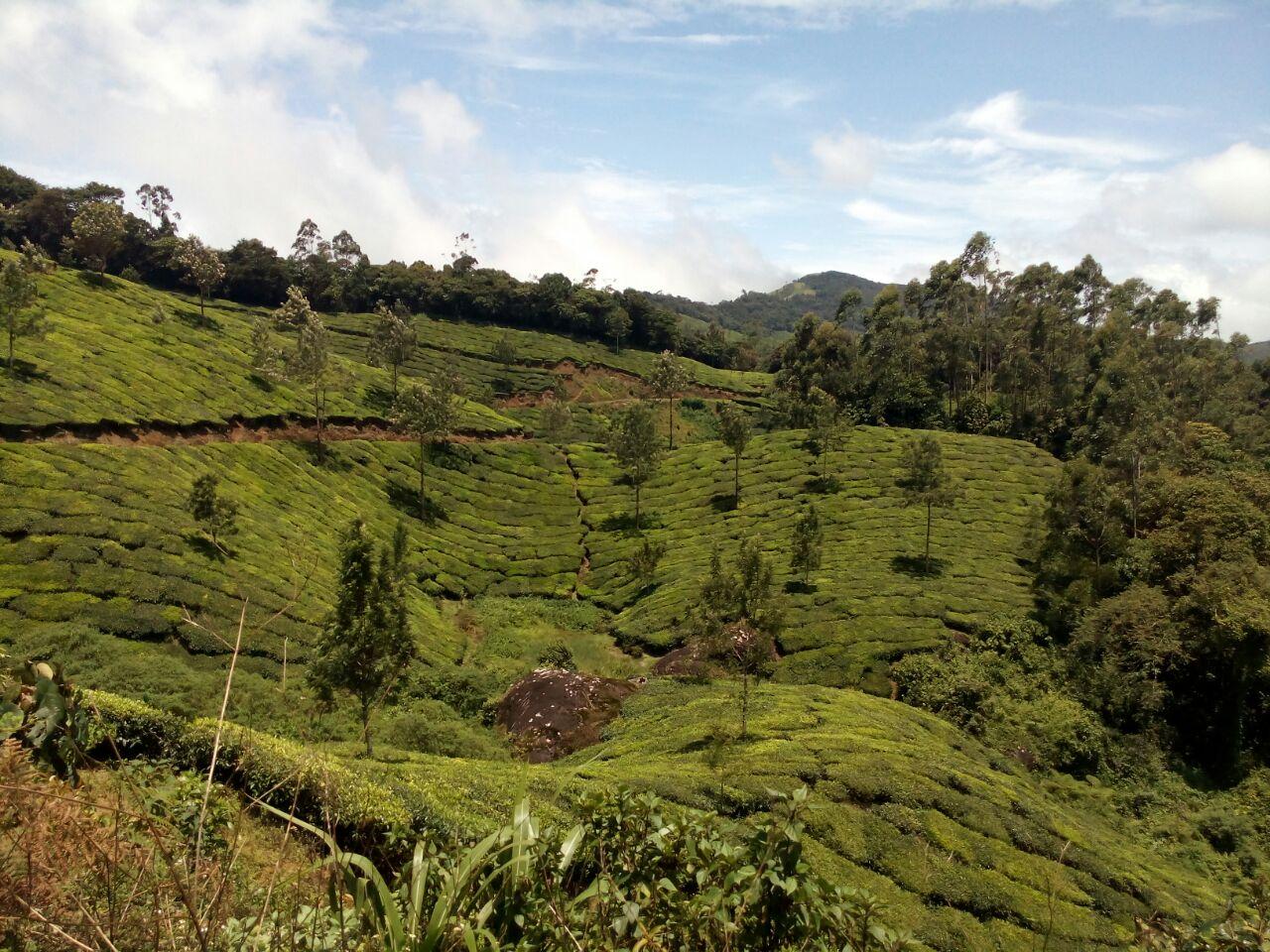
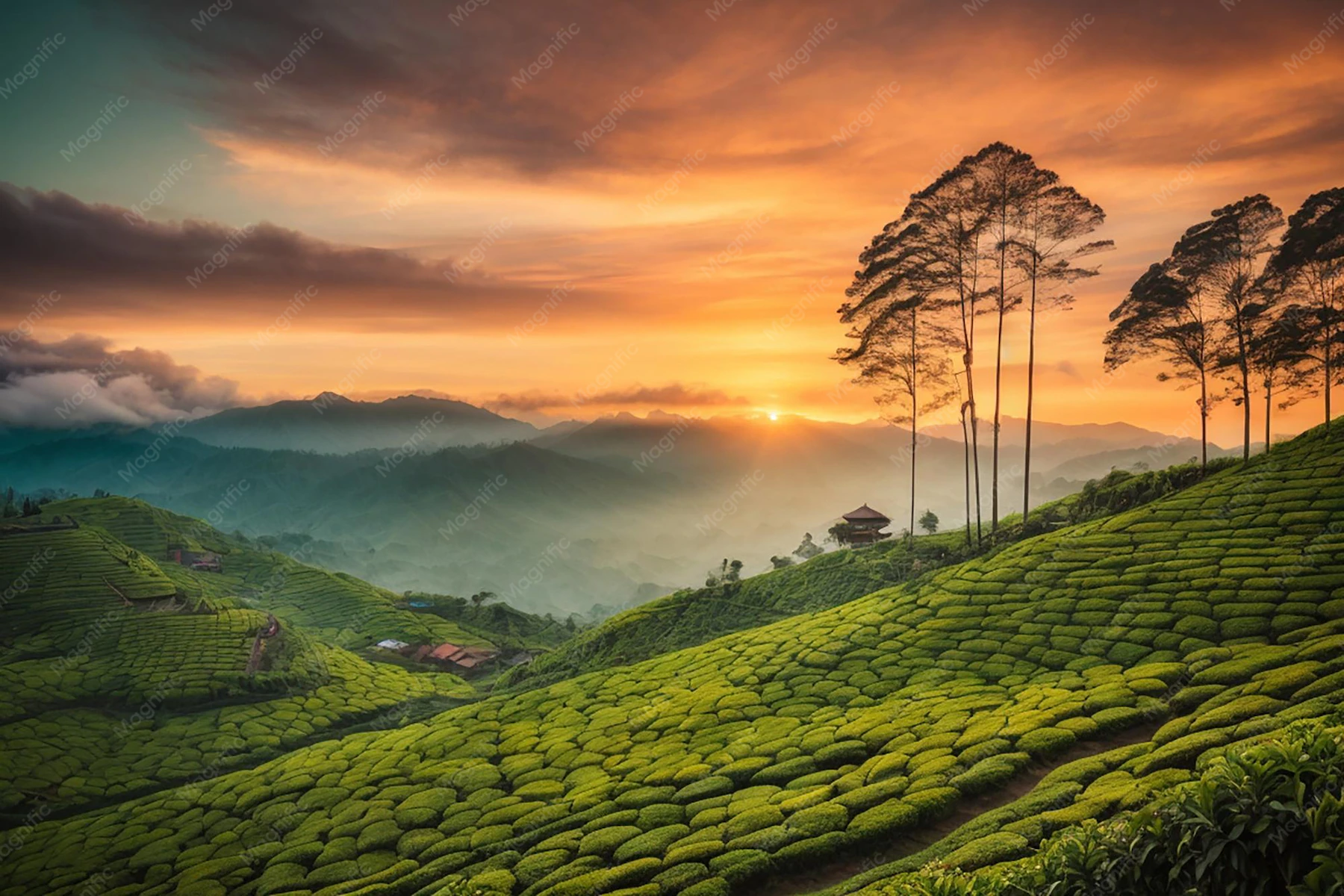
A hillside that has run, largely uninterrupted, as a working garden for a century and a half.

Dress code

Sturdy, closed-toe walking shoes are highly recommended to safely traverse the pathways around the estate. A light jacket or sweater is advised due to the cooler mountain temperatures in the Western Ghats.

Bags & security

All large backpacks and suitcases must be deposited in the secure locker area near the main gates. Visitors will undergo a quick security scan, and plastic packaging is strictly controlled.

Photography

Still photography is allowed in most galleries for a small surcharge of 20 INR. Video recording and photography within the active packaging lines are strictly prohibited to protect commercial processes.

Families & strollers

Children under five years of age enter for free. Pushchairs are easily used inside the paved museum hallways but are not practical on the steep earthen pathways of the plantation.

Accessibility

Ramps provide entry to the ground-floor historical galleries for wheelchair users. The upper machinery levels and some narrow plantation paths are accessible only via stairways.

Food & drink

Outside snacks and beverages are not allowed inside the exhibition chambers. An onsite tea stall sells authentic local cardamom brews, and a snack bar offers light refreshments.

Not allowed

× Plastic bags × Outside food × Pets × Professional video gear without permit × Alcohol × Weapons × Large luggage bags × Drones × Flammable substances

What to bring

✓ Comfortable footwear ✓ Warm jacket ✓ Physical cash for camera fee ✓ Umbrella ✓ Sunscreen

Opening hours

Mon Closed

Weekly closure day

Tue 09:00–17:00

Catch the 10:00 AM history presentation

Wed 09:00–17:00
Thu 09:00–17:00
Fri 09:00–17:00
Sat 09:00–17:00
Sun 09:00–17:00

Closures & exceptions

  • ·Every Monday — Weekly closure
  • ·Good Friday — Annual religious holiday

At a glance

Opening Hours

Tue–Sun: 09:00–17:00, Mon: Closed

Address

KDHP House, NH 49, Nullatanni, Munnar, Kannan Devan Hills, Kerala 685612

Best Arrival Window

09:00–11:30

Entry Price

150 INR (Entrance fee for adults)

Official Site

https://booking.kdhptea.com/

Getting there

Car · 240 mins · 8000 INR

Drive along National Highway 85 from Kochi via Adimali to reach Munnar, then follow NH 49 towards Nullatanni for 2 kilometers.

Public transport · 300 mins · 150 INR

Take a state-run KSRTC bus from Ernakulam KSRTC Stand directly to Munnar bus station, followed by an auto-rickshaw to Nullatanni.

Taxi · 10 mins · 150 INR

Hire a local taxi or jeep from Munnar town center to the museum entrance, which is located just 2 kilometers away.

Cancellation policy

Cancellations for the KDHP tea plantation in kerala tours must be requested at least 24 hours in advance to receive rescheduling options. Standard tickets costing 150 INR are generally non-refundable once purchased.

Plan your time

How long do you need?

Recommended time

1.5–2 hours

A standard visit to this historic Nullatanni estate and museum takes about 1.5 to 2 hours, which provides sufficient time to watch the documentary screening, observe the processing machinery on the factory floor, and participate in a tea tasting session. Booking your tea plantation in kerala tickets online beforehand is highly recommended to bypass potential entrance queues, especially during peak weekend travel times. We suggest arriving during the cooler 09:00 to 11:30 morning window to experience the mist-covered landscape and secure a seat for the scheduled 10:00 AM history presentation. Planning your arrival early also lets you explore the outdoor tea plantation in kerala comfortably before afternoon temperatures rise and larger crowds arrive.

Crowd levels through the day

09:00–11:30 (Best for tea plantation in kerala tour) Light
11:30–13:30 (Peak crowds) Heavy
13:30–15:30 (Afternoon tea plantation in kerala tours) Moderate
15:30–17:00 (Late afternoon window) Light
Plan ahead

When to go — year at a glance

Weather · crowds · average price — dots go green to amber to red as each metric rises.

September to March

This winter and post-monsoon period offers clear skies, minimal rainfall, and cool temperatures averaging 15 degrees Celsius, making it ideal for walking through the fields.

April to May

The summer months bring warmer daytime temperatures up to 25 degrees Celsius, but the morning mist provides a pleasant atmosphere for viewing the lush green hills.

June to August

The monsoon season brings heavy rainfall and dense fog, which creates beautiful green vistas but makes walking on plantation trails difficult due to muddy paths.

Insider tips

Helpful tips for your visit

Arrive early

Beat the afternoon crowds by planning your visit between 09:00 and 11:30, which also lines up with the morning history show.

Prepare cash

Although digital payments are widely accepted in cities, network connectivity can fail in the hills, so carry physical INR cash.

Pay the camera fee

If you want to document the historic machinery, buy the 20 INR camera slip at the ticket counter to avoid fines inside.

Book the tasting

Pay the small extra fee for the guided tea tasting room to sample strong CTC grades and delicate orthodox leaf variations.

Check the weather

Sudden rain showers are common even in dry months, so carrying a compact umbrella ensures you can still walk the plantation paths.

Visit the retail shop

Purchase plantation-fresh teas directly from the museum store, where prices are standardized and quality is guaranteed by KDHP.

Where to meet

Meeting points

KDHP House Main Gate

KDHP House, NH 49, Nullatanni, Munnar, Kannan Devan Hills, Kerala 685612

Look for the prominent stone archway and ticket counter right off National Highway 49.

Get directions
The story

The history behind the site

The story of this tea plantation in kerala begins in the wild Western Ghats. In the 1870s, the Kannan Devan Hills were dense forest land. The Poonjar chief held these slopes. In 1877, he leased a vast tract to John Daniel Munro, a British planter and lawyer. The lease covered the Nullatanni region near present-day Munnar. Munro cleared the forest with methodical intent. Early experiments favoured coffee, cinchona, and sisal. These crops faltered on the high, wet ridges. Tea proved better suited to the altitude. By 1880, the first tea bushes took root under the newly formed North Travancore Land Planting and Agricultural Society. A.H. Sharp planted the earliest recorded acre. The estate structure grew slowly, one clearing at a time. In 1895, Finlay Muir and Company absorbed the holdings. The Kannan Devan Hills Produce Company formed in 1897. This gave the estate its enduring name. The great flood of July 1924 nearly ended the enterprise. Torrential monsoon rain washed away the monorail, bridges, and much of the transport network. Reconstruction took years. Many of today's tea plantation in kerala tours still trace those rebuilt mountain roads. Tata Finlay took control in 1964, and Tata Tea followed in 1983. The decisive turn came in 2005. Facing hardship, Tata Tea restructured the operation into Kanan Devan Hills Plantations Company. Employees became majority shareholders. It became the world's largest employee-owned tea company. Roughly twelve thousand workers hold a stake in the land they cultivate. This ownership model shapes the estate's identity today. The KDHP House museum in Munnar preserves this record. Visitors on Munnar tea estate tour routes see original machinery, vintage photographs, and the Kannan Devan story told in sequence. Those seeking tea plantation in kerala tickets encounter more than scenery. They encounter a living industrial heritage. The high-range estate, the colonial lease, and the worker-shareholder transformation remain visible across these Munnar landmarks, and interest in tea plantation in kerala tour experiences continues to grow.

1877

Poonjar chief leases the Kannan Devan Hills tract to planter John Daniel Munro.

1880

First tea bushes are planted after coffee and cinchona experiments fail on the high ridges.

1897

The Kannan Devan Hills Produce Company forms, fixing the estate's enduring name.

1924

The July monsoon flood destroys the monorail, bridges, and transport network.

1964

Tata Finlay takes control of the estate operations.

1983

Tata Tea assumes ownership following restructuring.

2005

The company becomes Kanan Devan Hills Plantations, the world's largest employee-owned tea firm.

Photo spots

Best photo spots

Nullatanni Estate Viewpoint

Best light · Before 11:00

Stand near the edge of the terrace outside the museum to capture the expansive rolling hills. Booking a tea plantation in kerala tour allows you to walk down the paths between the lush green hedges for the perfect mid-ground scale.

Heritage Machinery Hall

Best light · 09:30–11:00

Inside the museum, frame the vintage rollers and processing gear against the rustic wood beams. Buying tea plantation in kerala tickets online will grant you quick entry to this moody indoor exhibition area.

Photo Point

Best light · Late afternoon

Located along the highway, this classic curve features towering silver oak trees framing the Munnar tea gardens. It is a signature stop on many tea plantation in kerala tours, providing an ideal backdrop for portrait photography.

Lockhart Gap View

Best light · Golden hour

This panoramic high-altitude point offers sweeping views of the valley and misty mountains. Capturing the landscape of this iconic tea plantation in kerala is a highlight of any visit.

Pothamedu View Point

Best light · Sunset

Position yourself on the cliffside path to photograph the vast valley blanketed with tea, coffee, and cardamom estates. The winding roads below create dramatic leading lines through the green canopy.

Gallery

Moments from the experience

Customer Reviews

What travelers say

Real experiences from real travelers

4.5
Based on undefined reviews
1 ★ 520
2 ★ 410
3 ★ 840
4 ★ 2600
5 ★ 11200
A
Aparna R.
India · 2026-06-18

Green as far as you see

We wandered the estate trails just after sunrise and the whole valley was under a thin fog that burned off by nine. The tea plantation in kerala here felt endless, row after row curling over the hills, and the air smelled faintly of eucalyptus and cut leaf. A guide showed us how the two-leaves-and-a-bud rule works.

T
Thomas K.
Germany · 2026-05-22

Munnar tea estate tour done right

Booked one of the tea plantation in kerala tours through our homestay and it was worth the early start. The factory smelled of drying leaf and the withering troughs were still running when we arrived. Bring a light jacket, the highland breeze bites before the sun clears the ridge.

S
Sofia M.
Spain · 2026-04-09

Beautiful but busy midday

The Munnar tea gardens are as green as every photo suggests, though by late morning the roadside spots filled with buses. We found a quieter path near the Nallathanni estate and had the slopes to ourselves. Watching pickers move through the bushes with their sacks was the highlight.

D
Daniel O.
United States · 2026-03-14

Highland air and endless rows

Standing on the ridge with the Western Ghats stacking up behind the tea rows is something I keep thinking about. We did a short guided walk and learned the estates date back to the British planters of the 1800s. Grab tea plantation in kerala tickets ahead if you want the factory portion, it sells out.

Y
Yuki T.
Japan · 2026-02-11

Cool morning walk

In February the mornings were crisp and the mist sat low over the tea bushes until midday. A worker let me try plucking and my basket looked pathetic next to hers. The Munnar tea country tour gave real context about how leaf grade is sorted.

P
Priya N.
India · 2026-07-02

Monsoon green

Even in early monsoon the estate was walkable between showers and the green turned almost neon. Our tea plantation in kerala tour ended at a small tasting room where we compared a bright first-flush against a darker leaf. The Anamudi peak peeked out of the clouds just as we left.

M
Marco B.
Italy · 2026-01-27

Worth the winding drive

The road up from the plains is all hairpins but the payoff is these vast sloping tea gardens near Munnar. We spent an hour just watching light move across the terraces. A cup of fresh estate tea at the top cost almost nothing.

H
Hannah W.
United Kingdom · 2025-11-19

Cardamom and tea hills

Late autumn light made the Kerala highlands glow amber by four in the afternoon. The tea plantation in kerala stretched over ridges dotted with cardamom and pepper vines, and our guide pointed out the old planter bungalows. Wear proper shoes, the plucking paths are muddy.

R
Rafael S.
Brazil · 2025-09-08

Quiet estate morning

We skipped the crowds by arriving at opening and had the misty rows mostly to ourselves. A Munnar tea garden walk with a local explained how altitude shapes the flavour up here. The shade trees and birdsong made it feel far from any town.

E
Elena V.
Greece · 2025-06-15

Green terraces and cool breeze

The scale of the tea slopes around Munnar caught me off guard, they roll on well past the horizon. We watched leaf being weighed at a collection shed and chatted with the pickers. If you want the factory visit, sort your tea plantation in kerala tickets the day before.

FAQ

Frequently asked questions

Everything you need to know for your journey

Around the corner

Nearby landmarks worth a detour

Eravikulam National Park

30 min drive

park

A sanctuary for the endangered Nilgiri tahr, offering scenic hiking routes along high-altitude grasslands.

Mattupetty Dam

25 min drive

landmark

A concrete gravity dam built in the late 1940s, popular for its scenic reservoir and speedboating.

Attukad Waterfalls

15 min drive

viewpoint

A seasonal waterfall tucked between hills and tea fields, accessible via a narrow wooden bridge.

Pothamedu View Point

15 min drive

viewpoint

An elevated vantage point offering panoramic views of valleys covered in tea, coffee, and cardamom.

Where to stay

Where to stay nearby

Blanket Hotel & Spa

15 min drive

luxury

A five-star resort overlooking the Attukad Waterfalls with upscale dining and spa services.

Moolakadai

5 min drive

district

A central transit area in Munnar offering various budget guesthouses, local cafes, and transport links.

Devonshire Greens

20 min drive

luxury

A premium boutique resort nestled in the valley, styled with colonial-era architecture and modern comforts.

Ready for Adventure?

Join thousands of happy travelers who have discovered this incredible experience

Book Your Experience Now