6 hr
Munnar: Wild Elephant Jeep Safari in Anakulam
- Expert local guide
- Small group
- Skip-the-line access
- Free cancellation
Jungle Safari In Kerala — Muthanga Wildlife Sanctuary, Wayanad
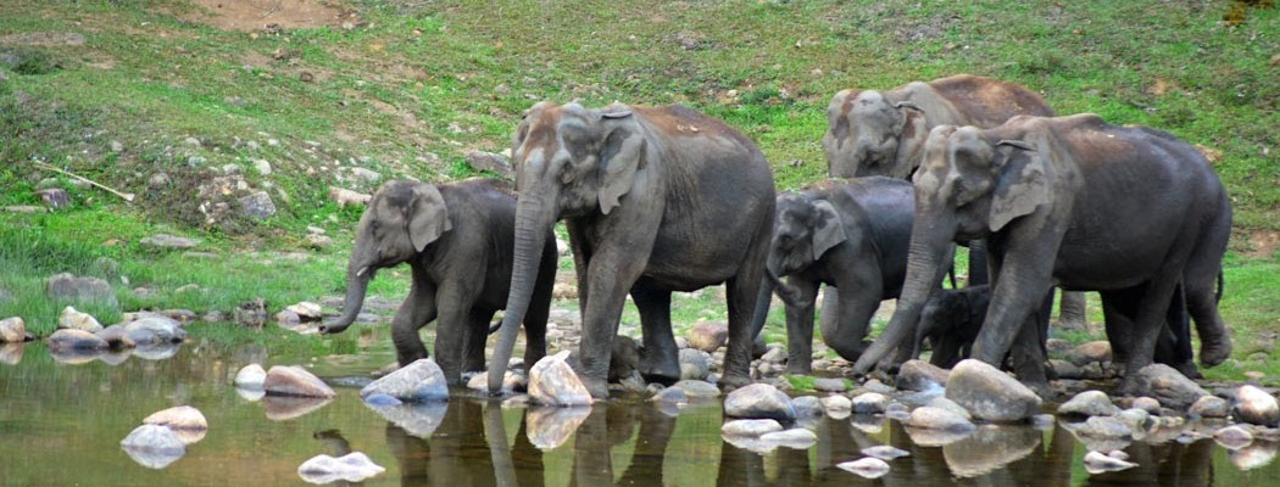
Cool mist over teak forest, elephants at the water's edge.
Compare fares, pick the fit — all bookings are mobile-voucher and eligible for free cancellation where shown.
6 hr
7 hr
72 hr
Worth it if you manage expectations
A jungle safari in kerala at Muthanga costs foreign adults 300 INR base entrance per person, plus jeep and guide charges layered on top. For that, you get a roughly two-hour ride through genuinely dense deciduous forest inside a working wildlife sanctuary — not a manicured park. Set your bar correctly: tigers exist here but sightings are rare, so treat any big-cat moment as luck, not the product. What you reliably buy is atmosphere and a strong chance of wild elephants, gaurs, spotted deer, and birdlife, especially in the 07:00–08:30 window when the forest is cool and active. Compared with generic Wayanad tours, these jungle safari in kerala tickets deliver real wilderness for a modest fee. It pays off for nature-minded travellers and photographers who value the forest itself; it disappoints anyone expecting guaranteed predators or a zoo-style checklist.
Bottom line: Book the jungle safari in kerala tour for the forest and the elephants, and any predator is a bonus.
For those planning a jungle safari in kerala tour, choosing between these two Wayanad wildlife safari zones determines whether you prioritize elephant-rich scrublands or dense bamboo foliage. Both ranges of the sanctuary offer opportunities to spot iconic species of the Western Ghats, but their booking logistics and accessibility differ.
|
Top pick Muthanga Safari |
Tholpetty Safari | |
|---|---|---|
| Sanctuary Zone | Southern range near Sulthan Bathery | Northern range near Mananthavady |
| Booking Method | Counter sales only on arrival | Online booking and counter sales |
| Crowd Levels | Very high with long queues | Moderate due to remote location |
| Landscape Type | Dry deciduous forest and scrubland | Moist deciduous forest and bamboo |
| Key Wildlife Sightings | Elephants, gaurs, and spotted deer | Elephants, langurs, and sambar deer |
| Cost Comparison | 300 INR base foreigner fee | 300 INR base foreigner fee |
| See tickets & prices |
Verdict: Choose Muthanga if you want the classic elephant-watching experience with open vistas and do not mind queuing early; however, travelers who prefer a quieter atmosphere should book Tholpetty jungle safari in kerala tours online to secure their slot, keeping in mind that both locations require purchasing separate jungle safari in kerala tickets.
Hand-picked experiences loved by thousands of travelers
10 hours
Free Cancellation
Experience the beauty of the Western Ghats with a boat safari, guided nature walk, and an immersive spice plantation tour.
5 days
Free Cancellation
Experience the best of Kerala on a 5-day journey through tea-clad mountains, exotic wildlife sanctuaries, and peaceful backwaters.
12 hours
Free Cancellation
Discover Kerala's hidden beauty with a scenic jeep safari, waterfall treks, and an authentic village lunch.
Arrive at the Muthanga entrance by 06:15 or 14:15 to secure tickets. Only 40 morning and 20 evening jeeps are permitted per session.
Board your assigned forest department jeep and meet your certified guide. Keep your identification documents ready for verification.
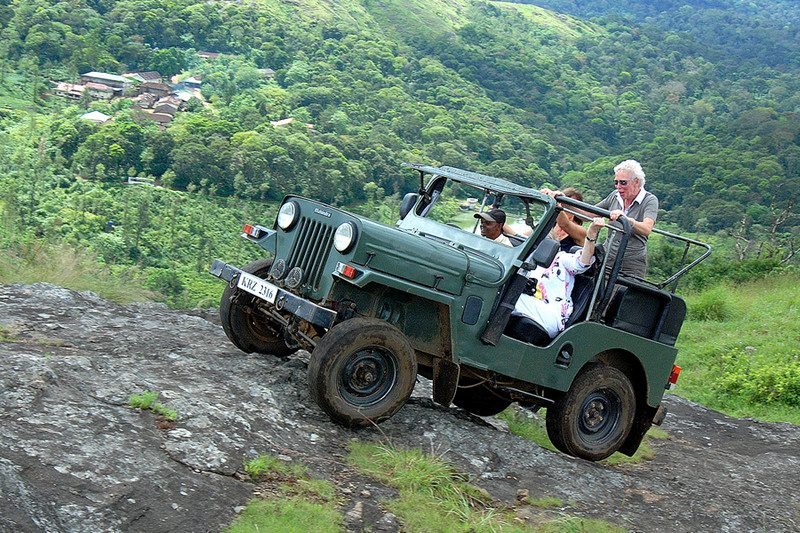
Drive along the designated dirt trails through deciduous forests to spot wild elephants, deer, and gaurs.
After the drive, visit the renovated interpretation centre at the base to learn about Nilgiri Biosphere Reserve biodiversity.
These dense bamboo forests form a natural canopy over the jeep tracks. They serve as a primary grazing corridor for the sanctuary's 400 wild elephants. The groves are home to rich insect biodiversity.
Built by the British in the 1900s, this historic two-story wooden rest house is constructed entirely without nails. It sits right at the edge of the forest reserve, offering direct views of grazing wildlife. Today, it serves as a heritage ecolodge for visitors.
This newly renovated education center features interactive displays spread across 4 distinct exhibition sections. Visitors can learn about Nilgiri biosphere flora, local tribal heritage, and regional conservation initiatives. It offers a detailed overview of the sanctuary's 200 bird species.
Managed by the forest department, this site trains captive and rescued kumki elephants. Visitors can observe the daily feeding and care routines of these massive animals. It plays a critical role in mitigating human-wildlife conflicts in the region.
Positioned overlooking a major natural water clearing, this vantage point provides views of wild herds. Gaurs, deer, and monkeys congregate here to drink, especially during dry spells. Over 200 waterholes are monitored in this zone to sustain the wildlife population.
You reach the Muthanga checkpost at Sulthan Bathery in the grey light before seven, when the teak line is still dripping and the air holds its overnight chill. You register at the forest office, pay the 300 INR entrance fee, and wait as an open jeep is assigned its route, driver, and armed guard. The gate lifts at 07:00, and you roll onto a rutted track that the tar road abruptly abandons. Within minutes the forest tightens around you. You scan the vayal grassland where mist still pools, and this is where the early window earns its reputation — a gaur lifting its head, a herd of spotted deer freezing mid-graze. You pause at a bend, engine cut, and listen: alarm calls carry through the bamboo, mapping something you cannot see. Your driver reads fresh dung and pugmarks in the dust and adjusts the loop accordingly. You climb a low rise, the canopy opens, and a Malabar giant squirrel arcs overhead in a red-brown blur. If the morning gives it, a bull elephant steps across the track ahead and you hold still until it melts back in. By mid-morning the light hardens and the animals withdraw. Your jungle safari in kerala closes as the jeep returns you to the gate, dust-streaked and quietly alert.
All the details about your upcoming adventure in one place
A jungle safari in Kerala takes you into the Western Ghats' protected forest reserves, where Periyar Tiger Reserve and Wayanad Wildlife Sanctuary shelter elephants, leopards, and over 320 endemic bird species along active elephant corridors. Expert naturalists lead each Kerala wildlife safari along designated jeep tracks through biodiversity hotspots that conservation agencies rank among South Asia's most ecologically significant zones. Comparing jungle safari in Kerala tours by forest zone, vehicle type, and guide accreditation helps you match the right reserve to your wildlife priorities.
Muthanga forms the eastern gateway of the Wayanad Wildlife Sanctuary, sitting directly against the borders of Karnataka's Bandipur and Tamil Nadu's Mudumalai — three states of contiguous forest that together shelter one of southern India's largest elephant populations. The sanctuary was constituted in 1973 and later folded into the Nilgiri Biosphere Reserve, a designation that recognises the region as a corridor rather than an isolated pocket of green. What makes a jungle safari in kerala here different from a manicured park is the terrain itself. The forest is a mosaic of moist deciduous teak, dry scrub, bamboo brakes, and swamp grassland the locals call vayal. Herds of gaur — the massive wild cattle that can weigh over a tonne — graze the clearings at dawn, while spotted deer, sambar, and Malabar giant squirrels move through the canopy above. Tigers and leopards range the reserve, though they are seldom seen; the elephant remains the animal the forest is built around, and the reason the sanctuary's boundaries were drawn to protect ancient migratory routes. The landscape carries older human marks as well. Edakkal, a short drive west, holds Neolithic petroglyphs scratched into rock shelters thousands of years ago, evidence that people have read these hills for a very long time. Wayanad's name is often traced to vayal nadu, the land of paddy fields, and the plateau's tea and coffee estates still press against the sanctuary edge, a reminder that conservation here is a negotiated line rather than a fixed wall. Today the reserve runs a strictly limited safari system precisely because the pressure on this corridor is real. Vehicle numbers per session are capped, routes are fixed forest tracks, and an armed guard and driver accompany each trip — measures that keep the wayanad forest safari tour from degrading the habitat it depends on. The famous mist that pools in the vayal at first light is not scenery alone; it is the cool window in which the big grazers feel safe enough to emerge into the open. For the visitor, the appeal of the kerala wildlife safari is its honesty. Nothing is staged. A drive may deliver a bull elephant crossing the track at close range, or it may offer only birdsong, fresh pugmarks, and the green weight of the forest closing overhead. That uncertainty is the point. A jungle safari in kerala at Muthanga trades spectacle for the genuine article: a working reserve where the wild still sets the terms, and where a single quiet clearing can hold more than any itinerary promises.

Nothing is staged; the wild still sets the terms, and a single quiet clearing can hold more than any itinerary promises.

For a jungle safari in kerala, wear earth-toned or dark-colored clothing such as forest green or khaki. Muted colors help visitors blend with the deciduous forests and avoid agitating the wildlife.
Security personnel inspect all bags at the entrance gate before you board a jungle safari in kerala tour. Single-use plastic items, alcohol, cigarettes, and flammable materials are strictly prohibited to protect the Nilgiri Biosphere Reserve.
Photography is permitted, but visitors must pay a fee of 45 INR for still cameras and 255 INR for video cameras. Flash photography is banned during the jungle safari in kerala to protect animal eyes and prevent defensive reactions.
Families with children should keep them seated and quiet inside the vehicle at all times. Loud noises can disrupt animal sightings and cause distress to wild elephants during these jungle safari in kerala tours.
The forest department jeeps are not wheelchair accessible due to the high-clearance rugged chassis required for rough terrain. Visitors with mobility constraints should contact the forest division office in Sulthan Bathery ahead of booking a jungle safari in kerala.
No food or open beverages are allowed inside the vehicles during the jungle safari in kerala. You may carry drinking water in a reusable metal flask or glass bottle.
Opening Hours
Mon–Sun: 07:00–10:00, 15:00–17:00
Address
Muthanga Wildlife Sanctuary, Sulthan Bathery, Wayanad, Kerala 673592, India
Best Arrival Window
07:00–08:30
Official Website
https://www.wayanadwildlifesanctuary.com/
Entrance Fee
300 INR (Base entrance fee for foreign adults, per person)
Car · 2h from Mysore · Varies
Drive along the Kozhikode-Mysore National Highway (NH 766) to the forest gate, which is the starting point for a jungle safari in kerala. Note that the forest road checkposts close daily between 21:00 and 06:00.
Public transport · 30 min from Sulthan Bathery · 50-100 INR
Take a KSRTC bus from Sulthan Bathery or Kozhikode heading towards Mysore, and disembark at the Muthanga forest entrance.
Taxi · 30 min · 1200-1500 INR
Hire a private taxi from Sulthan Bathery for a direct round-trip journey that includes waiting time during your forest exploration.
All jungle safari in kerala tickets purchased at the official Muthanga Wildlife Sanctuary counter are non-refundable. Jeep bookings and guide fees cannot be refunded or rescheduled under any circumstances.
Recommended time
1-2 hours per jungle safari in kerala tour
An official jungle safari in kerala covers a scenic loop within the Muthanga Wildlife Sanctuary, typically lasting one to two hours depending on weather and animal activity. The forest department strictly limits access to 40 vehicles for the morning Wayanad wildlife safari and 20 in the afternoon to protect native animals and maintain peace within the habitat. Because there is no advance booking system available, you must queue at the physical counter up to an hour before opening to secure your jungle safari in kerala tickets. The rugged wilderness roads are wet during monsoon months and dusty in the dry season, so plan to dress in comfortable, dark-colored clothing for the bumpy ride. For a wider regional itinerary, local agencies offer multi-day jungle safari in kerala tours that explore adjacent national parks and include transport from Sulthan Bathery.
Crowd levels through the day
Weather · crowds · average price — dots go green to amber to red as each metric rises.
This is the peak period for visiting with comfortable temperatures ranging between 15°C and 25°C. Animal sightings are frequent as wildlife moves through the dry deciduous forest areas.
Warm weather dries up smaller watering holes, drawing wild elephants and gaurs toward the larger reservoirs. Early morning drives are recommended to avoid midday heat.
Heavy rains often lead to temporary closures of the dirt tracks for safety. Ecotourism activities are generally suspended during periods of intense rainfall.
Lush green foliage and active waterfalls make for scenic forest landscapes, though wildlife spotting can be harder due to dense undergrowth.
Arrive at least 45 minutes before the opening times of 07:00 or 15:00 to secure your spot. Jeep availability is limited to 40 in the morning and 20 in the evening for each jungle safari in kerala session.
The national highway passing through the sanctuary has strict night traffic restrictions. All vehicles are prohibited from entering the forest stretch between 21:00 and 06:00.
Keep quiet when animals are spotted near the tracks. Loud sounds can frighten the wildlife, causing them to retreat into the thicker foliage.
Credit cards and mobile payment systems often fail due to poor cellular reception in the forest. Ensure you have enough cash for entry fees, jeep charges, and camera fees.
The sanctuary enforces a zero-tolerance policy for single-use plastics. Keep all food items inside your bags, and do not carry loose plastic wrappers.
Avoid dressing in bright red, yellow, or neon colors. Muted tones like olive green, brown, and navy blue are recommended to avoid startling the animals.
Muthanga Wildlife Sanctuary, Sulthan Bathery, Wayanad, Kerala 673592, India
Arrive early to buy tickets directly from the forest department counter; bookings are first-come, first-served.
Get directionsThe forests of Muthanga carry a memory older than any modern trail. In 1805, these dense teak stands became a theatre of war. Kerala Varma Pazhassi Raja, the rebel prince of Kottayam, led a guerrilla campaign against the British East India Company here. He drew on Kurichiya and Kurumba tribal archers, men who knew every ravine of the Wayanad interior. The British could not match their knowledge of the terrain. On 30 November 1805, Pazhassi Raja fell near the Mavila Thodu stream. His death closed one chapter, but the woodland kept its reputation as a place of resistance. Any modern jungle safari in kerala tour across Muthanga passes ground once used for ambush. The colonial era reshaped the land through logging. Teak plantations spread under Company and later British Indian administration. Only after independence did protection arrive. In 1973, the Wayanad Wildlife Sanctuary was constituted, and Muthanga became one of its core ranges. The sanctuary later joined the Nilgiri Biosphere Reserve, linking it to Bandipur and Mudumalai across state borders. In 1992, India launched Project Elephant, and Wayanad was folded into the Elephant Reserve network that gave the region its conservation weight. Herds still cross these corridors today, and the elephant corridor remains central to any jungle safari in kerala tickets a visitor might hold. The forest's tribal history returned to the headlines in 2003. On 19 February that year, the Muthanga incident unfolded when Adivasi families, led by the Adivasi Gothra Maha Sabha, occupied part of the sanctuary to press long-standing land claims. Police action left at least two people dead, including a constable and a protester, and drew national attention to tribal land rights in Kerala. The episode remains a defining controversy. Descriptive jungle safari in kerala tours now move through a landscape marked by that struggle, where the Wayanad highlands, teak canopy, and colonial guerrilla routes overlap. Wildlife trekking across these Wayanad landmarks reveals a terrain shaped as much by human conflict as by the wandering gaurs and elephants it now shelters. The history of Muthanga is not a backdrop; it is the ground itself.
Pazhassi Raja led a tribal-backed guerrilla revolt against the British in these forests.
Pazhassi Raja died near the Mavila Thodu stream, ending the Wayanad rebellion.
The Wayanad Wildlife Sanctuary was constituted, with Muthanga as a core range.
The sanctuary was incorporated into the Nilgiri Biosphere Reserve.
Project Elephant brought Wayanad into India's Elephant Reserve network.
The Muthanga incident saw Adivasi protesters occupy the sanctuary over land rights, ending in deaths.
Embarking on a jungle safari in kerala is a thrilling way for families to spot elephants, though the bumpy forest tracks require physical preparation. For a smooth start, pack plenty of water and plan for a morning arrival.
Children aged 5 and older will get the most out of this experience. The bumpy one-hour Muthanga Wildlife Sanctuary tour can be very jarring for toddlers and infants.
While many agencies promote jungle safari in kerala tours as all-ages adventures, keep in mind that the vehicles are open-sided. Keep kids securely seated and ensure they do not stand up while the vehicle is in motion.
Leave strollers behind, as the forest tracks and Muthanga Eco-Tourism Centre grounds are uneven and gravelly. A sturdy baby carrier is the best option for navigating the boarding area.
Buying your jungle safari in kerala tickets online or early in the morning is highly recommended. This helps you avoid long wait times at the gate with impatient children.
Opt for a morning slot to enjoy cooler temperatures and higher chances of animal sightings. If you plan to book a private jungle safari in kerala tour, prepare children for wait times at the gate.
Real experiences from real travelers
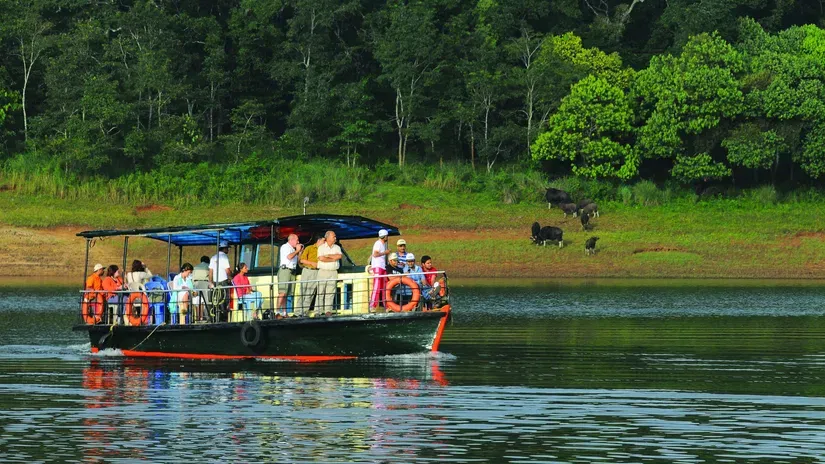
We booked the early boat and jeep combo and the jungle safari in kerala delivered a herd of elephants along the Periyar shoreline within the first hour. The mist was thick until about 7am, then the light broke and we spotted spotted deer and a Malabar giant squirrel. Bring a light jacket, the water crossing was cold.
The red-earth track through Wayanad was rough in the best way, and our naturalist knew exactly where the hornbills nest. On this jungle safari in kerala tour we saw gaur grazing near the bamboo and heard langurs the whole drive. Book the sunrise slot, the afternoon heat kills the animal activity.
Periyar Tiger Reserve is worth the trip and the boat glided right past a family of wild boar. The guide pointed out a nesting hornbill and a python coiled on a branch that I would never have seen alone. Only downside was the number of boats on the lake at once.
Our guide slowed the jeep for twenty minutes so a shy sambar could cross, which told me this was a proper wildlife tour and not a rushed loop. The Western Ghats canopy is dense and the birdlife along the trail was constant. I got clear photos of a giant squirrel from the trail below.
Walking the buffer zone before the drive, the smell of wet earth and the sound of birdsong made the whole jungle safari in kerala feel alive. We saw fresh elephant tracks pressed into the mud and a small herd across the valley near sunset. Wear closed shoes, the leeches are real after rain.
The kerala wildlife tour started slow but by the second hour we had gaur, deer, and a distant tiger pugmark that the tracker measured for us. Golden hour on the ridgeline viewpoint was the highlight, the ghats stretched out in layers of haze. Buy your jungle safari in kerala tickets a day ahead in peak season.
Doing the Periyar boat first and the jeep after worked well, the lake gave us elephants and the forest gave us the smaller stuff. A hornbill flew directly over the jeep near the bamboo grove. The naturalist was genuinely knowledgeable about the Western Ghats ecosystem.
The early jungle safari in kerala tours run before the heat, and the cool misty drive through the teak forest was the best part of our Kerala trip. We watched a herd of elephants at a waterhole for a long, quiet stretch. The track gets muddy, so a proper 4x4 matters.
Went in the low season expecting little and still saw sambar, wild boar, and a Malabar giant squirrel in the wet canopy. The reserve was almost empty which made the whole thing feel more remote. Rain came in the afternoon so do the morning slot.
Our tracker read fresh pugmarks and led us to a clearing where a lone tusker was feeding at golden hour. The dense Western Ghats foliage and the sound of the forest made this the standout wildlife experience of the region. Reserve your jungle safari in kerala tour early for the sunrise departure.
Everything you need to know for your journey
The base entry fee for foreign adults at the Muthanga Wildlife Sanctuary is 300 INR per person. Additionally, visitors must pay local jeep rental and guide fees directly at the forest office.
The Muthanga Wildlife Sanctuary is situated along the Mysore-Kozhikode Highway, approximately 16 kilometers east of Sulthan Bathery in Wayanad, Kerala.
No, bookings for this Wayanad Wildlife Sanctuary experience are handled on a first-come, first-served basis at the physical ticket counter. There are no online booking portals for the daily jeep safaris.
The Muthanga Wildlife Sanctuary opens daily from 07:00 to 10:00 and from 15:00 to 17:00. The best arrival window is 07:00–08:30 to secure entry before the morning jeep quota is filled.
We recommend wearing earth-toned colors like olive green or brown to blend with the natural environment of the Wayanad Wildlife Sanctuary. Avoid bright garments and heavy perfumes.
Yes, children are permitted to join, but parents must ensure they remain quiet inside the vehicle. The rugged terrain of the Muthanga Wildlife Sanctuary might be bumpy for infants.
There is an basic restroom facility at the Muthanga Wildlife Sanctuary interpretation center. No food stalls are permitted inside the forest boundaries to prevent littering and animal feeding.
No large bags or luggage are allowed on the jeep. All handheld items are subject to security checks at the Muthanga Wildlife Sanctuary entrance to prevent plastic litter.
Yes, you can take photos, but flash photography is strictly banned. Still cameras incur a 45 INR fee, while video cameras are charged 255 INR at the Wayanad Wildlife Sanctuary counter.
No, the rugged forest department jeeps used for the tour at Wayanad Wildlife Sanctuary do not support wheelchair loading. The uneven dirt tracks inside the forest are highly bumpy.
A quiet nature trail lined with giant bamboo groves that serves as a vital corridor for migrating wild elephants.
A historic 13th-century stone temple built during the Vijayanagara Empire that was later used as an ammunition store by Tipu Sultan.
The border crossing point where the protected forests of Kerala meet the national park trails of Karnataka.
An archaeological museum showcasing Neolithic stone weapons, clay sculptures, and local tribal artifacts.
A historic two-story wooden log house managed by the Forest Department, offering basic double rooms surrounded by deep forest.
A rustic nature resort offering cottage accommodations and local dining close to the sanctuary gates.
The nearby town of Sulthan Bathery features multiple budget and mid-range hotels, local restaurants, and spice markets.
Join thousands of happy travelers who have discovered this incredible experience
Book Your Experience Now